
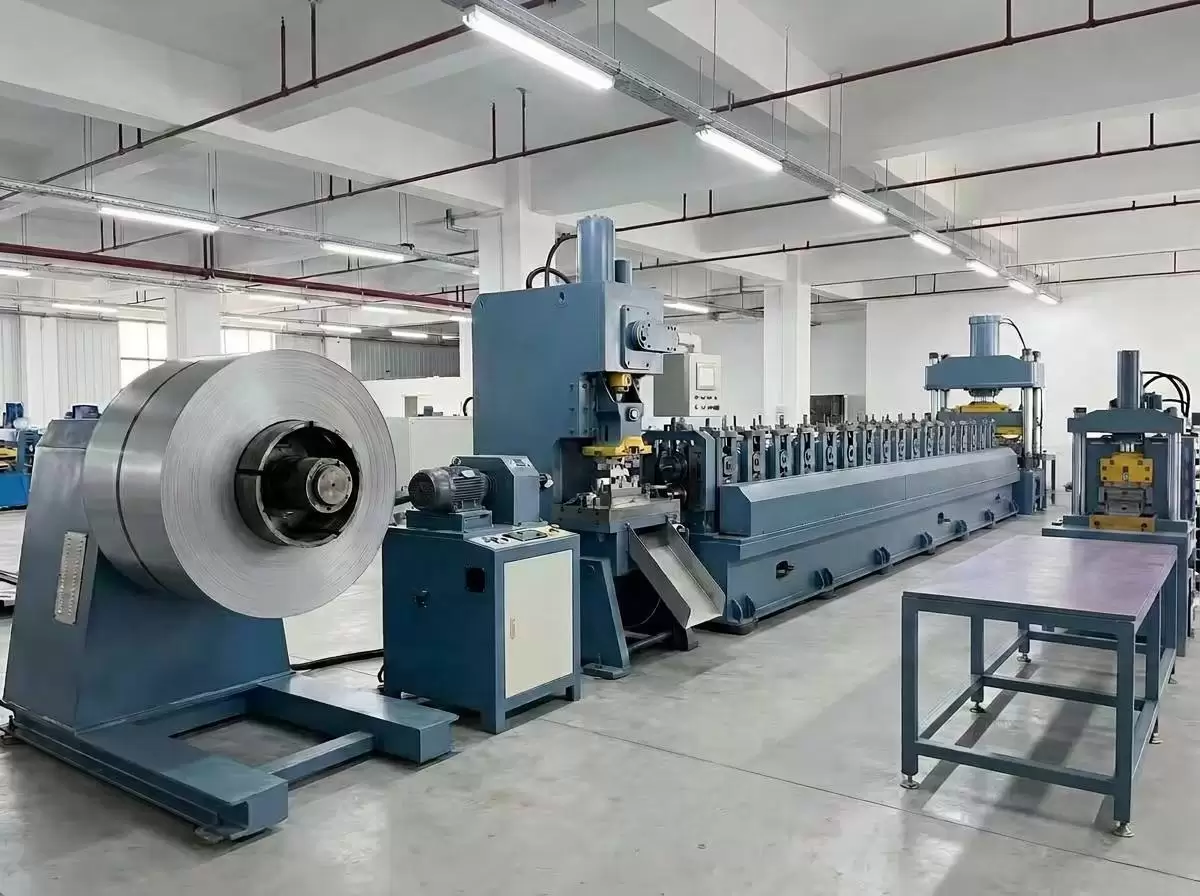
Pallet Rack Upright Roll Forming Machine: Complete Guide
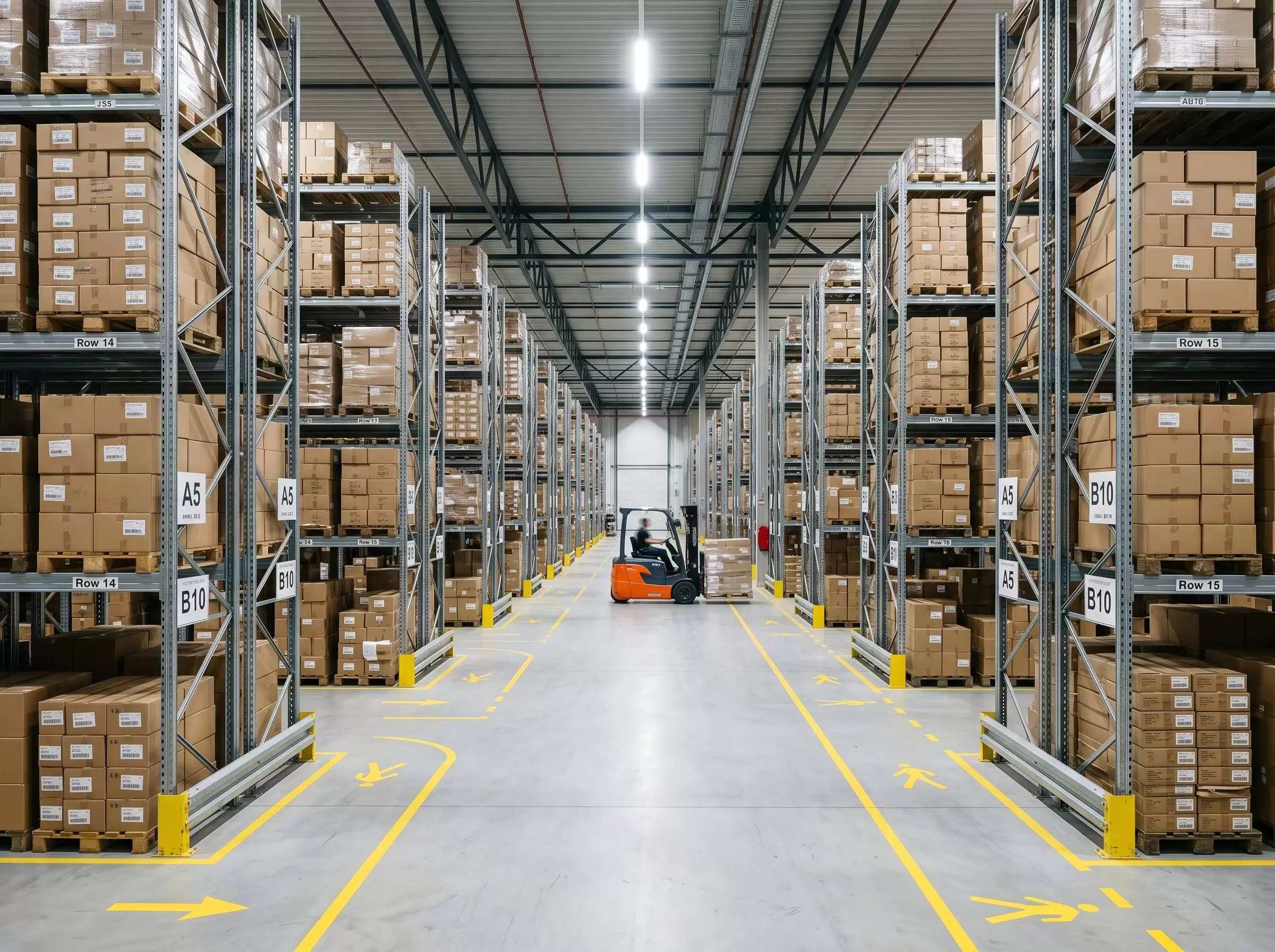
Every warehouse shelf, every logistics center aisle, every cold storage rack — they all start with one component: the upright column. Without a precisely formed, load-bearing upright, no racking system holds weight safely.
The machine that produces these uprights at scale is the pallet rack upright roll forming machine. This guide covers everything you need to know before buying one: how it works, what specifications matter, which punching system suits your operation, and what to ask your supplier.
What Is a Pallet Rack Upright Roll Forming Machine?
A pallet rack upright roll forming machine is a specialized cold-forming production line that continuously converts flat steel coil into perforated vertical columns — the structural backbone of warehouse pallet racking systems.
The machine takes raw galvanized or high-strength steel coil and, through a series of progressive roller stations, forms it into the final upright profile. Crucially, it simultaneously punches a precise pattern of teardrop or rectangular holes along the column — the holes that allow beam connectors to click or bolt into place at any height.
The result is a structural component that must meet strict load-bearing requirements, consistent hole pitch tolerances, and uniform cross-section geometry across every meter of production.
Why Pallet Rack Demand Keeps Growing
The global warehouse racking market was valued at $9.71 billion in 2024 and is projected to reach $12.41 billion by 2030, according to Grand View Research. The primary drivers are straightforward:
- E-commerce fulfillment centers multiplying across Southeast Asia, the Middle East, and Latin America
- Cold storage infrastructure expanding to support food and pharmaceutical supply chains
- Logistics automation requiring taller, denser racking configurations
For manufacturers of warehouse racking components, this demand growth translates directly into pressure on production capacity and quality consistency. A properly specified upright roll forming machine is the answer to both.
How a Pallet Rack Upright Roll Forming Machine Works
A complete upright production line operates as an integrated system. Here is the full sequence:
1. Coil Loading (Decoiler) Steel coil — typically 1.5 to 3.0 mm thick galvanized or Q235B steel — is loaded onto a hydraulic decoiler. The decoiler feeds the strip forward at a controlled, consistent rate.
2. Leveling The strip passes through a servo-driven leveling unit that flattens any residual coil curl. Flat, stress-free material is essential for accurate hole pitch and consistent profile geometry downstream.
3. Punching (Critical Stage) Before or during forming, a punching unit stamps the teardrop or rectangular hole pattern into the strip. The hole spacing — typically 50 mm pitch — must be accurate to ±0.5 mm, because beam connectors will engage these holes on every rack in the system. (More on punching methods below.)
4. Progressive Roll Forming The punched strip enters the main forming mill, which contains 18 to 24 roller stations. Each station bends the steel a few more degrees. By the final station, the flat strip has become a finished upright profile — typically a C-section, box section, or omega section, depending on the racking system design.
5. Cutting to Length A hydraulic or servo cutoff unit cuts the upright to the programmed length — commonly 2,000 mm to 6,000 mm for standard pallet racking, up to 12,000 mm for very narrow aisle (VNA) systems.
6. Output and Stacking Finished uprights exit onto a run-out table. Automated stackers can be integrated for high-volume operations.
The Four Punching Methods: Which One Is Right for You?
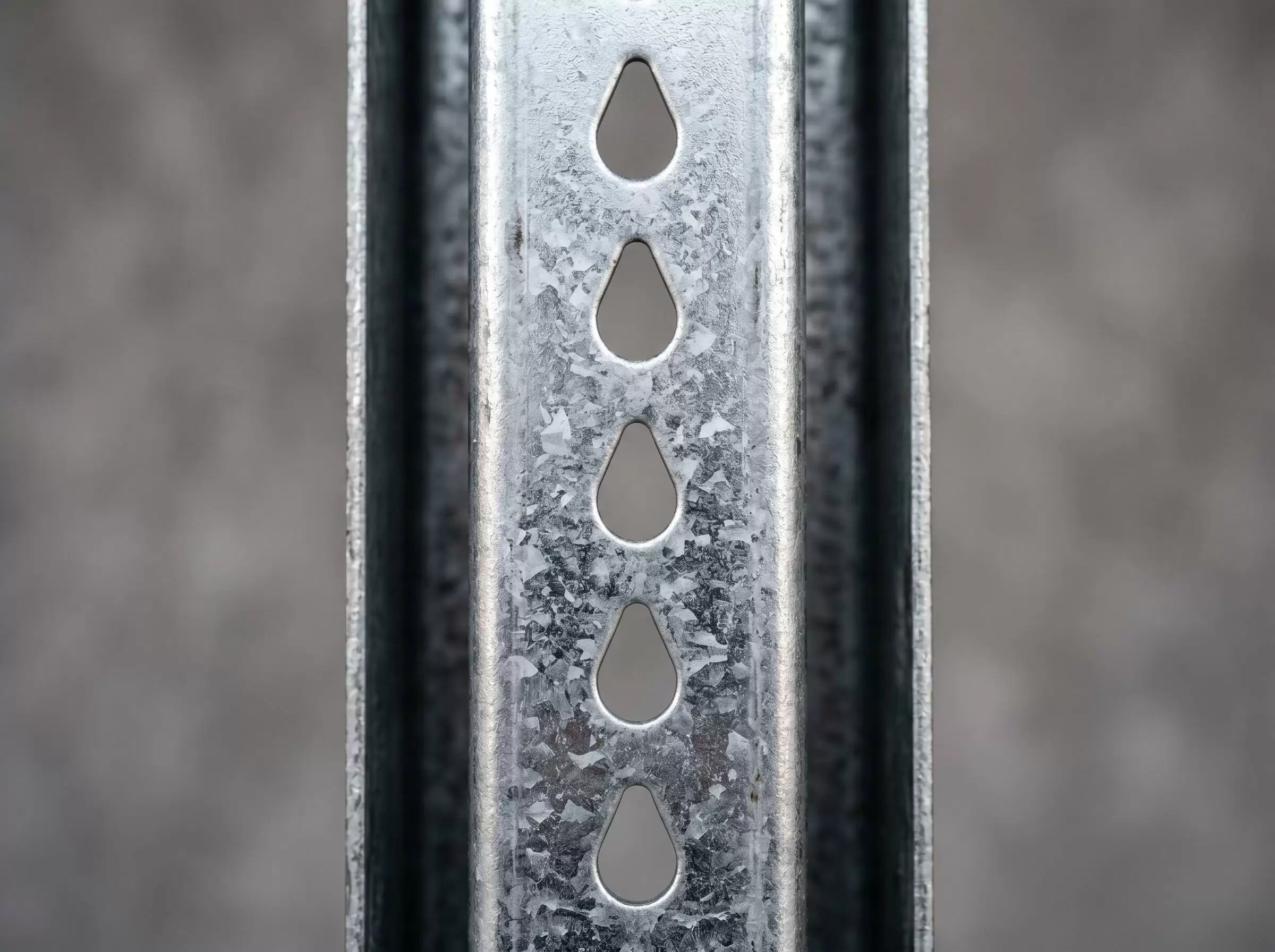
The punching system is the most critical specification decision for an upright rack machine. It determines your production speed, changeover time, and hole accuracy.
Choosing the right method:
If you produce one or two standard rack profiles at modest volume, a hydraulic inline punch delivers solid performance at a reasonable cost. If you serve multiple customers with different rack specifications and need to switch hole patterns several times per shift, servo press punching pays for itself quickly — pattern changes that take 40 minutes with manual tooling take under 5 minutes with a servo system. If you run a single pattern at maximum volume (three shifts, minimal downtime), rotary punching achieves speeds no other method can match.
Key Technical Specifications
When evaluating machines, compare suppliers on these parameters:
The Complete Production Line: What You Actually Need
A standalone upright machine is only part of the picture. A full pallet racking production operation typically requires:
Upright line — the machine described in this article, producing vertical columns
Beam / step beam line — a separate roll forming machine producing horizontal load beams (box section or step section)
Bracing line — a C-section or tube forming machine producing diagonal frame bracing
Beam welding station — welds end connectors onto beam profiles
Some manufacturers start with the upright line and beam line only, adding bracing and welding equipment as output grows. Others invest in the complete system from the start to minimize handling between processes.
If you are planning a new factory, model the production flow before purchasing. The upright line will typically be your bottleneck — size it for your peak order volume, not your current average.
What to Ask Your Supplier Before Ordering
Seven questions that separate serious suppliers from those who will cost you money later:
1. What is the roller material and hardness specification? Accept nothing below Cr12MoV hardened to HRC 58–62. Economy rollers wear quickly and cause profile drift.
2. What punch tooling material do you use? SKD11 or equivalent. Ask for the specification in writing.
3. Can you show factory acceptance test results for hole pitch accuracy? A reputable manufacturer will have test data. If they cannot provide it, that is a meaningful signal.
4. What is the profile changeover time, and what does it require? Get a specific answer in minutes, not vague reassurances. If the machine requires manual adjustment of 20+ components, calculate the true cost of that time against your order mix.
5. What control system brand is used? Siemens, Mitsubishi, or Delta PLC systems are standard choices with widely available local technical support. Proprietary systems create long-term dependency on the machine supplier for any modifications.
6. What is the warranty period, and what does it cover? 12 months is the market minimum. 24 months with clear terms on what is and is not included is better.
7. Do you provide on-site commissioning and operator training? Initial commissioning by a qualified engineer prevents the most common startup problems. Insist on it being included in the contract.
Upright Profile Types Produced
Different racking systems require different upright cross-sections. Common profiles produced by upright rack roll forming machines include:
- C-section upright — the most widely used profile globally; open-back design allows easy beam connector insertion
- Closed box section — higher torsional rigidity; used in drive-in and push-back racking systems
- Omega / hat section — used in specific European and Middle Eastern racking standards
- Slotted angle — lighter-duty retail and workshop shelving
Most machines are built to produce one profile family. If you need multiple profile types, discuss tooling interchangeability with your supplier before placing an order.
Frequently Asked Questions
How long does it take to manufacture an upright rack roll forming machine? Standard configurations: 45 to 60 days. Custom profiles or servo punching systems: 60 to 90 days, including tooling design, machining, assembly, and factory acceptance testing.
Can the same machine produce uprights of different heights? Yes. The cut-to-length system is programmable — you enter the target length and quantity, and the machine cuts automatically. Switching from 2,400 mm to 3,600 mm uprights takes seconds at the control panel.
What is the typical production output per shift? At 10 m/min with an average upright length of 2.4 m, one machine produces approximately 250 uprights per hour, or 2,000 uprights per 8-hour shift. Actual output depends on material loading time, changeovers, and any secondary inspection steps.
Is galvanized steel or painted steel more common for rack uprights? Both are used. Galvanized (hot-dip or electro-galvanized) is preferred for corrosive environments such as cold storage and outdoor applications. Powder-coated painted steel is more common for standard ambient-temperature warehouses. The roll forming machine handles both — surface finish is determined upstream, before the coil is loaded.
Conclusion
A pallet rack upright roll forming machine is a capital investment that sits at the center of your warehouse rack production operation. Every upright your factory ships — and the structural integrity of every rack system your customers build — depends on the consistency and reliability of this machine.
Get the punching method right for your volume and product mix. Specify roller tooling at Cr12MoV quality. Confirm hole pitch accuracy in writing before you sign. And choose a supplier who can demonstrate factory test results, not just brochure specifications.
If you are ready to discuss your upright production requirements — profile drawing, material specification, target output, and punching system preference — contact our engineering team. We will review your needs and provide a detailed technical proposal.
Related Articles:
- What Is a Roll Forming Machine? Complete Beginner's Guide
- Rack Beam & Bracing Roll Forming Machine: Specs and Applications
- Warehouse Racking System: From Design to Production Line
